You step into what feels like a typical board meeting. The agenda looks normal. The coffee is warm. You expect a routine discussion on budget updates or maybe an enrollment report. But then the board chair looks at you and says: “We’d like you to develop a plan to expand operations.” It’s the kind of pivotal moment when many leaders turn to Paradox Consultants Group for expert guidance.
Whether you’re leading a Christian school, a nonprofit, or a small business, that request can hit you in two ways at once—like a shot of adrenaline and a weight on your chest. Expansion can be exciting. It can mean more impact, more reach, more opportunities. But it can also be overwhelming—more responsibilities, more risk, more questions than answers. That’s why many leaders turn to Paradox Consultants Group to help navigate the mix of excitement and pressure, bringing both strategic clarity and peace of mind to the process.
The first instinct is to leap into planning mode: brainstorming locations, mapping out new classrooms, calculating how many new staff members you’ll need, calling your architect, and drafting timelines. You’re already envisioning the ribbon-cutting ceremony—but this is where Paradox Consultants Group steps in to help you pause, reassess, and ensure every step aligns with your mission.
But here’s the truth: Before you figure out how to expand, you must fully understand why.
Expansion Without Purpose Is a Recipe for Mission Drift
Too many organizations skip the soul-searching stage and jump straight into spreadsheets, floor plans, and funding pitches. They treat expansion like a math problem when in reality, it’s a vision problem.
Growth in size is not the same as growth in mission. If your “why” is unclear, expansion can slowly pull you away from the very purpose that made your organization thrive in the first place. Paradox Consultants Group helps leaders safeguard against this mission drift by ensuring every growth initiative is firmly rooted in the organization’s core values and long-term vision.
Ask yourself these questions—honestly:
Why are we expanding?
Is this decision driven by mission, or by external pressure?
Are we called to do more, or to do what we do better?
If you can’t answer those questions with both clarity and conviction, it’s not time to break ground—it’s time to go back to reflection. Paradox Consultants Group specializes in guiding leaders through that reflective process, helping them uncover the deeper “why” behind expansion so that every step forward is intentional, mission-driven, and set up for long-term success.
The Pressure to Grow Can Be Misleading
Here’s where leaders often get stuck: you see growth as the natural next step because it’s what everyone else is doing. Your competitor is opening another campus. The business across town just doubled its square footage. A donor has offered to fund a new building if you can “make it happen fast.” This is exactly when Paradox Consultants Group helps leaders pause, evaluate the opportunity, and ensure expansion aligns with long-term mission and vision.
But urgency from outside voices is not the same as a calling from your mission. The danger is that you may expand because you can—not because you should.
Think about it:
Churches that launch satellite campuses before they’ve built strong leadership pipelines often struggle with culture drift.
Schools that rush to add a grade level without the right teachers in place end up with unhappy families and faculty burnout.
Nonprofits that open a second location without sustainable funding create instability in both the new and original site.
In each of these cases, expansion wasn’t wrong—it was just out of alignment.
Before the How, Nail the Why
When you know your “why,” every decision flows from it. It becomes your North Star. It helps you know when to say yes, when to pause, and when to walk away from a seemingly great opportunity. Paradox Consultants Group works alongside leaders to clarify and protect that “why,” ensuring it guides every step of the expansion process and keeps growth aligned with the organization’s true mission.
Your “why” should connect directly back to your mission statement and strategic vision. This means you’re not just asking “Why expand?” but also “How will this expansion strengthen what we’ve already committed to do?” Paradox Consultants Group works with leaders to uncover these answers, ensuring that every growth decision is grounded in clarity and purpose.
A clear why will:
Unite your team under a shared purpose.
Communicate confidence and clarity to your stakeholders.
Help you prioritize resources so they create the greatest impact.
The R.A.W. Framework for Expansion
Once your “why” is clear, it’s time to get R.A.W. That stands for:
Reality Check
Alignment Audit
Wins & Warnings
1. Reality Check
This is where vision meets the numbers. You might be inspired by your mission, but you also need to be grounded in operational truth. Paradox Consultants Group helps bridge that gap—taking your inspiring vision and testing it against real-world data, financial realities, and organizational capacity so you can make confident, well-informed decisions about expansion.
Ask:
What is our current financial health?
Do we have the infrastructure to support expansion—staffing, training, technology, and systems?
What’s the realistic timeline to execute without burning out our people?
Too often, organizations think of expansion as a sprint to the finish line, but it’s actually more like running a marathon—you need endurance, pacing, and the right preparation to get there strong. Paradox Consultants Group helps leaders build that endurance with strategic planning, mission alignment, and the tools needed to sustain success long after the launch.
2. Alignment Audit
An Alignment Audit ensures that expansion strengthens your mission rather than diluting it.
Consider:
Will this expansion serve the same audience, or will it shift our focus?
Does this location or program fit within our long-term vision?
How will this impact our organizational culture?
Expansion that forces you to compromise core values, lower quality, or abandon your strengths is not truly growth—it’s fragmentation.
3. Wins & Warnings
Every opportunity comes with both potential wins and potential pitfalls. A wise leader weighs both before making a decision. That means not only identifying the exciting possibilities—like increased reach, stronger community impact, or new revenue streams—but also confronting the hard truths, such as financial strain, leadership gaps, or cultural shifts that could weaken your foundation. Paradox Consultants Group guides leaders through this balanced evaluation process, helping them see the full picture so that optimism is grounded in reality and risks are addressed before they become roadblocks.
Potential Wins:
Increased capacity to serve more people.
Stronger community presence.
Greater donor or customer engagement.
Potential Warnings:
Financial strain or overextension.
Leadership gaps in the new operation.
Distraction from your primary mission.
Your goal is to identify the red flags early so you can either address them or decide the risk is too great.
Expansion Case Study: Mission First, Then Growth
A Christian school in the Southeast was offered a prime piece of property for a new campus. On paper, it was perfect—close to a growing neighborhood, easy access to major roads, and a donor ready to help.
But the leadership team stopped to ask:
Does this align with our mission and culture?
Can we support the quality of education we’re known for in two locations?
What will this mean for teacher recruitment and retention?
After a thorough R.A.W. process, they realized the timing wasn’t right. Instead, they invested in strengthening their existing campus—improving facilities, deepening staff development, and expanding program offerings. Two years later, with guidance from Paradox Consultants Group, they revisited expansion with a stronger foundation, a clearer strategy, and a united leadership team. This time, the growth was not only sustainable and mission-aligned, but also positioned them for long-term success without sacrificing their core values.
The Courage to Wait
Sometimes, the most strategic move you can make is to pause. Leaders often feel pressure to “strike while the iron is hot,” but wisdom often looks like patience.
Waiting doesn’t mean you’re doing nothing—it means you’re building the stability, systems, and culture that will make expansion not only possible, but successful.
Start with Mission, Vision, and Values
Every successful expansion begins long before blueprints are drawn or budgets are approved. It starts with the most foundational elements of your organization—your mission, vision, and values. Paradox Consultants Group helps leaders clarify and strengthen these pillars before any growth plans take shape, ensuring that every decision is anchored in purpose from the very beginning.
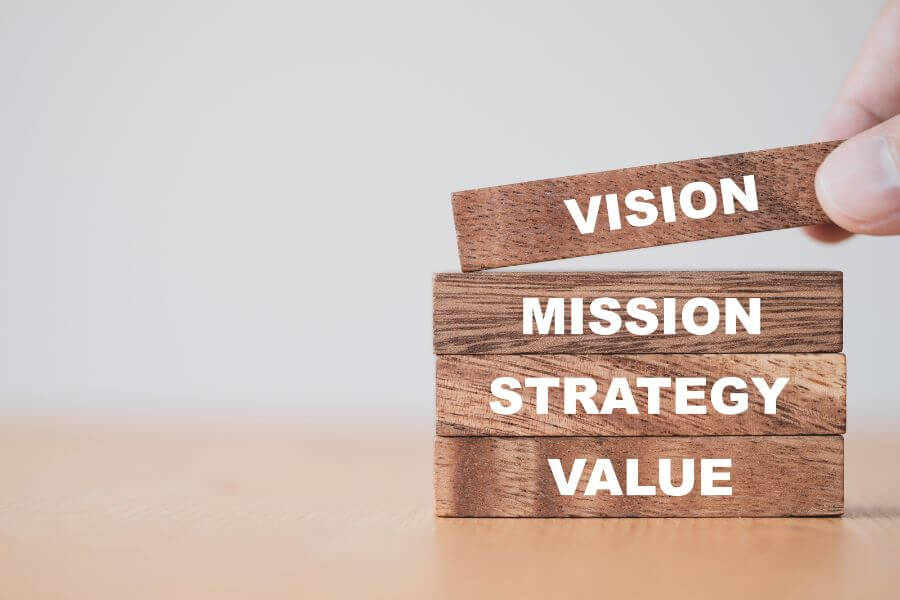
Your mission defines your purpose. It’s the “why” behind everything you do. Your vision describes the future you’re striving to create. It’s the “where” you’re headed. Your values guide how you behave as you pursue that vision. They’re the “how” you operate day to day.
When these three are crystal clear—and actively driving your decisions—they act as your compass during times of growth. When they’re vague, outdated, or ignored, expansion can quickly become dangerous.
“We’d like you to develop a plan to expand operations.”
Why Clarity Matters Before Growth
Expanding without a strong grounding in mission, vision, and values is like setting sail without a map. You might have the wind at your back, but you’ll have no guarantee you’re heading toward the right destination. In fact, you could be sailing directly into storms you could have avoided.
The temptation for many leaders is to assume these foundational pieces are “obvious” to everyone in the organization. But ask your staff or board to articulate your mission or vision in their own words, and you might be surprised by the inconsistency. If your internal team can’t clearly communicate these, there’s no way they can protect them during the complex, high-pressure process of expansion.
Example of Getting It Right: Chick-fil-A
Chick-fil-A is one of the most well-known examples of values-driven growth. For decades, they resisted rapid expansion—turning down opportunities that other companies would have jumped at—because they knew their model required leaders who fully embodied their values, not just managers who could run a store.
They invested heavily in leadership development, customer service culture, and community impact. Their vision wasn’t to be the biggest fast-food chain; it was to be the most loved.
Today, their measured approach has led to industry-leading revenue per location, a fiercely loyal customer base, and a brand that remains consistent in culture and quality across the country. The restraint they showed early on set the stage for explosive—but controlled—success later.
Example of Getting It Wrong: Quiznos
In the early 2000s, Quiznos seemed unstoppable. Stores were opening across the country at a blistering pace. But rapid growth came with serious cracks in the foundation.
They overextended without providing adequate franchisee support or maintaining tight brand control. Many new franchise owners found themselves with poor locations, limited training, and unrealistic profit expectations. As tensions grew, lawsuits followed. Stores began closing as fast as they had opened.
Within a decade, the brand had all but disappeared from the market—not because the food suddenly became bad, but because the expansion was fueled by speed over strategy. The mission, vision, and values took a back seat to rapid market saturation, and the consequences were irreversible.
The Lesson
The difference between Chick-fil-A and Quiznos wasn’t money—it was mission alignment and operational readiness. Expansion that honors your identity strengthens your organization. Expansion that ignores it risks destroying what made you successful in the first place.
The R.A.W. Framework for Expansion
At Paradox Consultants Group, we guide clients through strategic growth decisions with a process we call the R.A.W. Framework. It’s designed to keep expansion decisions rooted in purpose and executed with precision.
R – Realign with Mission, Vision, and Values
Before you plan how to grow, realign with why you exist.
Ask:
Are we still doing what we were created to do?
Have our goals shifted unintentionally?
Do our people understand and embody our values?
This step often reveals hidden drift—small compromises or shifts that, over time, have moved the organization away from its original mission. Without catching those, expansion will only multiply the misalignment.
A – Define Action Items with Strategic Clarity
Once you’re confident in your alignment, it’s time to translate vision into actionable, measurable steps.
Ask:
What facilities are needed?
What staff roles must be added, trained, or restructured?
What benchmarks define success in the first 12 months?
This is where most teams jump in too early. Without the clarity from the “R” stage, the “A” stage becomes reactive and scattered. But when your “why” is strong, the “how” becomes intentional.
Best Practice:
Develop a written strategic plan that includes:
Key milestones – Tangible markers of progress (e.g., facility acquisition, staff onboarding, community launch events).
Responsible parties – Clear accountability for each step.
Timelines – Realistic schedules that allow for quality, not just speed.
Financial forecasts – Budgets that include both initial investment and long-term sustainability projections.
A good plan isn’t just a to-do list—it’s a living document that guides decision-making, keeps teams aligned, and ensures accountability.
W – Win by Executing with Discipline and Feedback Loops
In the R.A.W. Framework, the “win” isn’t just opening a new location or launching a new program—it’s achieving sustainable, mission-aligned impact.
You know you’re winning when:
Your staff thrives under the new structure, not just survives it.
Your clients, students, or families experience increased value without feeling the growing pains.
Your leadership team celebrates progress because they see the vision being fulfilled in real, measurable ways.
Winning requires more than initial enthusiasm. It demands:
Ongoing evaluation – Are you meeting the benchmarks you set?
Real-time feedback loops – How are staff, stakeholders, and clients experiencing the changes?
The discipline to adjust or say no – If something’s not working, you must have the courage to pivot or stop before it does damage.
Example:
A nonprofit expanded into a neighboring city with a new community center. Within three months, attendance was high, but staff turnover was climbing. Feedback revealed that onboarding had been rushed and new hires felt unsupported.
Instead of ignoring the problem, leadership paused further expansion, invested in training, and implemented a mentorship program. Six months later, staff retention rebounded, and both locations were thriving.
Why This Process Works
The R.A.W. Framework works because it forces leaders to slow down before speeding up. It aligns passion with process. It keeps mission drift in check.
Most importantly, it turns expansion from a reactive response into a strategic decision. Instead of being swept up in the excitement of “bigger,” it keeps you focused on “better.”
Why Outside Guidance Matters
When you’re a leader deeply involved in the day-to-day operations of your school, nonprofit, or ministry, you carry a unique burden. You see the details—budgets, schedules, staff concerns, program needs—up close. You’re deeply invested. You care.
But there’s a hidden challenge in this level of involvement: it can be hard to see the full picture. The closer you are to something, the more difficult it becomes to view it objectively. Urgent issues crowd out strategic thinking. Personal biases—no matter how well-intentioned—can cloud decision-making. The pressure to “just move forward” can cause you to skip critical steps that protect your mission in the long run. This is where Paradox Consultants Group steps in—bringing an objective, values-driven perspective to help leaders slow down, assess the situation holistically, and make expansion decisions that are both strategic and mission-aligned.
This is why so many organizations turn to Paradox Consultants Group for guidance during seasons of expansion.
A Fresh, Objective Perspective
An outside consultant can ask the questions insiders sometimes avoid. We’re not weighed down by internal politics, past decisions, or emotional attachments to “the way things have always been done.”
Our role is to bring clarity, even when the truth is uncomfortable. We look beyond the excitement of growth to assess whether expansion is truly aligned with your mission, vision, and values—or whether it’s being driven by urgency, competition, or donor pressure. At Paradox Consultants Group, this means asking the hard questions, challenging assumptions, and ensuring that every growth decision is rooted in long-term purpose rather than short-term momentum.
And because our work is rooted in Biblical leadership values, we hold both the spiritual and operational health of your organization as priorities. In other words, we’re not just asking, Can you do this? We’re also asking, Should you?
Proven Frameworks for Mission Alignment and Operational Readiness
At Paradox Consultants Group, we don’t rely on guesswork or vague advice. We use proven, step-by-step frameworks that help you:
Evaluate mission alignment – Is this expansion consistent with your organizational identity and long-term purpose?
Assess operational readiness – Do you have the leadership, systems, and financial health to support this growth without sacrificing quality?
Identify strategic risks – What could derail this expansion, and how can we address those risks before moving forward?
Too often, organizations think of expansion as “building something new.” We see it as “building something right.” That requires patience, intentionality, and the discipline to slow down before speeding up.
Tools That Uncover Leadership Strengths and Gaps
One of our most valuable resources is the Harrison Assessment—a leadership tool that helps identify both the strengths and the blind spots of your leadership team.
Why does this matter for expansion? Because growth will amplify whatever’s already in your organization—both the good and the bad. If you have a strong culture of collaboration, expansion can strengthen it. But if you have unresolved leadership gaps, those will multiply under the pressure of growth. Paradox Consultants Group uses tools like the Harrison Assessment to uncover these strengths and weaknesses early, so leaders can address gaps before they become costly challenges during or after expansion.
The Harrison Assessment gives you an honest, data-backed view of where your leadership team is prepared and where they need development. This allows us to recommend targeted coaching, restructuring, or role adjustments before expansion begins, setting you up for long-term stability.
Customized Strategic Plans that Align Vision with Execution
Every organization is unique. A cookie-cutter approach to expansion is a recipe for misalignment and frustration. That’s why Paradox Consultants Group creates customized strategic plans that translate your vision into practical, achievable steps—plans that reflect your mission, fit your culture, and set you up for sustainable success.
Your plan will include:
Clear milestones – so you know exactly what progress looks like.
Defined roles and responsibilities – so everyone understands who’s doing what.
Timelines – that balance momentum with sustainability.
Financial projections – that account for both the costs of expansion and the resources needed to sustain it over time.
This is where big dreams become actionable reality. Without this step, expansion often collapses under unclear expectations and poorly allocated resources.
Who We’ve Helped
We’ve been honored to guide a wide variety of organizations through significant expansion projects:
Christian schools planning multi-million-dollar campus expansions, ensuring facilities growth didn’t come at the cost of educational quality or community culture.
Nonprofits restructuring for long-term impact, building the leadership pipelines and systems needed to scale their reach without burning out their teams.
Churches launching or strengthening educational ministries, developing partnerships that align with their mission and multiply community impact.
In each case, our goal has been the same: help leaders slow down, realign, and move forward with confidence.
Growth Is a Stewardship Decision
Just because you can grow doesn’t mean you should.
In leadership, expansion is more than an operational choice—it’s a stewardship decision. You’ve been entrusted with people, resources, and a mission. That trust carries the responsibility to make decisions that protect and advance that mission for years to come. Paradox Consultants Group helps leaders navigate this responsibility with wisdom and clarity, ensuring that growth is not just possible, but purposeful and mission-driven.
When expansion is simply a reaction to market pressure, competition, or short-term opportunity, it risks becoming mission drift. But when it’s a faithful, prayerful response to purpose, it can be transformative.
The Four Questions to Ask Before You Expand
When you walk into that boardroom and hear the words:
“We need a plan to expand,”
take a breath and start here:
Why are we doing this?
Is it to deepen our mission impact or simply to get bigger?
How do we realign with our mission?
Are we clear on our purpose and united as a leadership team?
What action items will move us toward success?
Do we have the right steps, resources, and accountability in place?
How do we define and measure the win?
What will success look like 12 months after expansion?
When you answer these questions honestly, you create the foundation for purposeful growth.
Get R.A.W. Before You Get Big
At Paradox Consultants Group, we encourage leaders to Get R.A.W.—Realign, Act with clarity, and Win through disciplined execution—before they get big. This framework helps ensure that growth strengthens your organization rather than stretching it beyond its breaking point. By following this process, we equip schools, nonprofits, and ministries with the tools, insights, and accountability they need to expand in a way that protects their mission, maximizes their resources, and creates lasting impact.
Ready to Build with Purpose?
If you’re considering expansion, don’t navigate the process alone. Let’s talk about how we can help your school, nonprofit, or ministry expand with clarity, conviction, and confidence.