
Leading With Determination: Reclaim Your Focus in a World Competing for Your Attention
January 2, 2026
Misreading the Environment: Why Private Schools Plan for Linear Change and Face Nonlinear Disruption
February 20, 2026One of the least discussed, but most consequential, leadership risks in private school governance today is governance lag. It rarely appears in financial audits, accreditation reports, or board self-evaluations, yet it quietly amplifies every other vulnerability within a school. Governance lag occurs when oversight structures are designed primarily for stability while reality increasingly demands agility.
In calm seasons, stability works. Policies hold. Committees deliberate. Decision-making follows predictable rhythms. But during disruption, enrollment shifts, reputational challenges, leadership transitions, or cultural crises, those same systems can become liabilities. Decisions that once felt prudent begin to feel late. Processes designed to protect the institution inadvertently slow its ability to respond.
This tension is not theoretical. It has played out repeatedly across industries, including finance, healthcare, and education. During recent banking stress, oversight systems were technically functioning as designed. Boards asked, “Is this within policy?” and “Are controls being followed?” Meanwhile, conditions were changing faster than policy frameworks could adapt. The institutions that struggled most were not reckless, they were slow.
The same pattern emerges in private school governance when oversight mechanisms emphasize procedural correctness over situational wisdom. Schools rarely fail because leaders ignore policy. More often, they falter because governance structures cannot adjust fast enough when assumptions break.
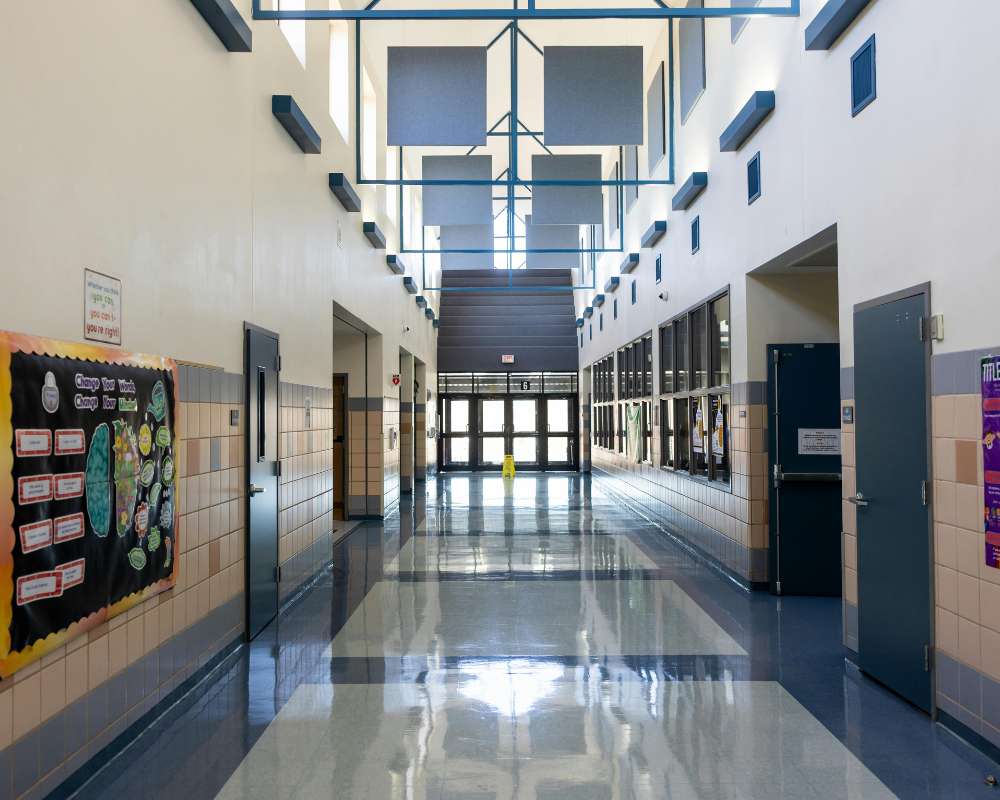
Stability as a strength, and a risk, in private school governance
Boards in private schools are rightly designed to protect mission, ensure accountability, and steward resources over time. These responsibilities sit at the heart of effective private school governance. Without them, schools drift, leadership becomes unchecked, and trust erodes.
However, when governance systems are optimized exclusively for stability, they become brittle under pressure. Policies grow thick, decision cycles lengthen, and authority becomes diffused across committees that meet monthly or quarterly. In normal conditions, this creates consistency. In volatile conditions, it creates delay.
This is not a failure of intent. Boards are often acting faithfully within their governance mandate. The issue is structural. Oversight frameworks built for predictability struggle in environments defined by uncertainty, speed, and reputational sensitivity.
Organizational research reinforces this tension. Scholars studying complex adaptive systems have long warned that systems optimized for efficiency and control in stable environments often underperform in volatile ones. What makes organizations strong in calm seasons can make them fragile in storms.
In private school governance, this fragility often appears only after damage has begun.
How governance lag shows up in private schools
Governance lag rarely announces itself clearly. It does not arrive as a dramatic failure of oversight. Instead, it emerges quietly through patterns that feel reasonable in isolation but harmful in combination.
Common signs of governance lag in private school governance include:
- Extended decision cycles requiring multiple committee reviews while circumstances evolve daily or weekly
- Boards focused on policy compliance while strategic wisdom and contextual judgment go largely unexamined
- School leaders constrained by unclear authority, unsure which decisions they can make independently during moments that demand speed
- Fragmented information flows, where trustees receive updates from different channels, weakening unity and trust
Private schools often experience governance lag during enrollment declines, sudden leadership changes, parent or community backlash, or internal cultural crises. By the time formal governance processes fully activate, momentum has already been lost. Trust, among families, faculty, or donors, has often begun to erode.
In these moments, boards frequently respond by tightening controls, requesting more documentation, or slowing decisions further. While understandable, this reaction often deepens the very lag that created the problem.
Why private school governance struggles with speed
At its core, private school governance is designed to reduce risk. Policies exist to prevent impulsive decisions. Committees exist to provide checks and balances. These are healthy instincts. But when risk is defined only as deviation from policy rather than failure to respond, governance becomes misaligned with reality.
Speed in governance is often misunderstood. Fast decisions are assumed to be reckless, emotional, or insufficiently vetted. In truth, speed is rarely about haste. It is about preparedness.
Organizations that respond quickly to disruption do so because authority has been clarified in advance, trust has been built intentionally, and assumptions have been examined before they are tested. Slow organizations are not necessarily more thoughtful; they are often less prepared.
This distinction matters deeply in private school governance, where reputational trust and relational capital are as important as financial controls. Families do not experience delay as prudence. They experience it as uncertainty.
Lessons from governance research and real-world disruption
Research on nonprofit governance consistently highlights the cost of rigidity. The Bridgespan Group, in its studies of nonprofit resilience, has shown that organizations with highly rigid oversight structures struggle to respond effectively during periods of disruption. Boards designed exclusively for control often lack the flexibility required for crisis leadership.
Similarly, post-pandemic studies of school governance revealed stark differences in outcomes. Schools with pre-defined emergency authority, clear head-of-school discretion, and adaptive board practices were able to pivot quickly, academically, operationally, and relationally. Those relying solely on traditional board cycles and committee approvals often lagged behind, even when they had strong leadership.
These findings point to a critical insight for private school governance: effectiveness during disruption is rarely determined by values or intent. It is determined by structure.
The core question at the heart of private school governance
During stable seasons, boards rightly ask, “Is this within policy?” That question protects integrity, consistency, and accountability. It is essential.
During disruption, however, a different question becomes more important:
“Is this still wise?”
Wisdom integrates policy, context, timing, and human impact. It considers not only what is allowed, but what is needed. Wise private school governance does not abandon policy, it contextualizes it.
When boards cling exclusively to policy compliance during moments of rapid change, they unintentionally transfer risk rather than reduce it. Leaders become hesitant. Decisions stall. Stakeholders lose confidence.
The schools that navigate disruption well are not those with the most rules, but those with governance systems capable of discernment.
Resilience in private school governance is adaptability
The most important lesson from recent organizational failures is not financial, it is organizational. Resilience is not simply strength or endurance. Resilience is adaptability.
Healthy private schools are not defined by the thickness of their policy manuals or the length of their traditions. They are defined by their ability to adjust when assumptions no longer hold. In private school governance, this means recognizing when stability must give way to responsiveness.
Research by March and Levinthal on organizational learning emphasizes that adaptability requires challenging assumptions, not merely optimizing existing processes. Organizations that fail are often excellent at executing yesterday’s model but resistant to questioning whether that model still fits today’s reality.
Governance lag emerges when boards confuse consistency with wisdom and procedure with leadership.
What adaptive private school governance looks like in practice
Adaptive private school governance is often misunderstood as reactive or permissive. In reality, it is neither. Adaptive governance is intentional, disciplined, and prepared. It strengthens oversight by aligning authority, information, and decision-making speed with real-world conditions.
Rather than replacing traditional governance, adaptive governance complements it. Policies still matter. Fiduciary responsibility remains central. The difference lies in how governance systems respond when reality diverges from expectations.
Below are the defining characteristics of adaptive governance in private schools, not as theory, but as operational practice.

1. Stress-testing assumptions, not just financials
Most boards are diligent about reviewing budgets, enrollment projections, and long-term forecasts. These reviews are a core responsibility of private school governance. However, far fewer boards interrogate the assumptions beneath those numbers.
Assumptions are invisible until they fail. Enrollment projections assume stable demand. Tuition models assume predictable affordability. Staffing plans assume retention. Trust models assume goodwill.
Adaptive boards ask harder, forward-looking questions, such as:
- What if enrollment decisions compress into a shorter window?
- What if a single reputational issue reshapes parent confidence?
- What if faculty morale shifts faster than survey cycles capture?
- What if donor sentiment changes before financial indicators do?
These questions are not pessimistic; they are preparatory. Stress-testing assumptions allows private school governance to anticipate nonlinear change rather than react to it. Boards that practice this kind of inquiry are less surprised, and therefore less delayed, when disruption arrives.
2. Clarifying decision authority before disruption occurs
One of the most common causes of governance lag in private schools is unclear authority during moments that demand speed. When a crisis emerges, leaders often pause not because they lack ideas, but because they are unsure what they are empowered to do.
Adaptive private school governance addresses this before it becomes a problem.
Effective boards explicitly define:
- Which decisions the head of school can make independently during disruption
- Which decisions require board consultation rather than full approval
- Which matters must still come to the full board regardless of urgency
This clarity protects both leadership and governance. Heads of school can act decisively without fear of overstepping, and boards retain oversight without becoming bottlenecks.
Importantly, authority clarity is not abdication. It is alignment. Boards that fail to clarify authority often end up making more decisions, not fewer, because leadership hesitates and escalates prematurely.
3. Strengthening the board–head partnership
At the heart of effective private school governance is a strong, trust-based relationship between the board and the head of school. Governance lag frequently emerges when this relationship becomes overly transactional.
In lagging systems:
- Boards focus on compliance metrics rather than strategic insight
- Heads of school filter information out of concern for reaction or delay
- Communication becomes cautious rather than candid
Adaptive governance prioritizes partnership over posture. Boards that operate effectively during disruption invest in relational capital long before they need it. They cultivate shared understanding, regular informal dialogue, and mutual confidence.
This does not eliminate accountability. It strengthens it. When trust exists, boards can ask harder questions without triggering defensiveness. Leaders can surface concerns early without fear of overreach.
In private school governance, trust accelerates clarity, and clarity accelerates action.
4. Distributed leadership as a governance asset
Governance systems that rely too heavily on a single leader or a single committee are inherently slower to adapt. Bottlenecks form. Information narrows. Decisions stall.
Adaptive private school governance recognizes distributed leadership as a strategic advantage. This does not mean consensus-based paralysis. It means intentionally expanding the number of trusted voices who can interpret, synthesize, and respond to emerging conditions.
Examples include:
- Empowered executive teams with defined crisis roles
- Board officers trained to act between full meetings
- Standing committees with delegated authority in specific domains
Distributed leadership increases speed without sacrificing alignment. When multiple leaders share a common framework and trust one another, decisions can move forward without waiting for perfect information.
5. Building decision-making speed as a learned capability
Speed in governance is often framed as instinctual or personality-driven. In reality, speed is a skill, and in private school governance, it is a learnable one.
Boards that respond quickly to disruption typically do so because they have practiced. Scenario planning, tabletop exercises, and crisis simulations allow boards to experience decision-making pressure in low-stakes environments.
These exercises:
- Expose unclear authority lines
- Reveal information gaps
- Surface hidden assumptions
- Normalize decisive action
Just as schools drill for fire safety without expecting a fire, boards can rehearse governance decisions without anticipating a crisis. Preparation turns speed from a risk into a capability.

6. Treating trust as a strategic governance metric
Trust is often discussed as a cultural outcome rather than a strategic variable. In private school governance, this distinction matters.
Research consistently shows that organizations with higher trust recover faster from disruption. Stakeholders extend grace. Communication is interpreted generously. Leadership decisions are given time to work.
Adaptive boards monitor trust as intentionally as they monitor finances. This includes:
- Parent confidence signals beyond enrollment numbers
- Faculty morale indicators beyond annual surveys
- Donor sentiment beyond giving totals
When trust begins to erode, governance lag becomes more dangerous. Decisions that might otherwise succeed encounter resistance simply because confidence has been weakened. Boards that recognize trust as a leading indicator, not a trailing one, intervene earlier and more effectively.
7. Moving from episodic to continuous governance learning
Traditional private school governance often treats learning as episodic. Boards review performance annually, conduct periodic self-assessments, and update policies infrequently.
Adaptive governance treats learning as continuous.
After major decisions, effective boards ask:
- What assumptions proved accurate?
- Where did we experience delay?
- What information arrived too late?
- How did our governance structure help or hinder response?
These reflections are not about blame. They are about refinement. Governance systems, like academic programs, improve through iteration.
Boards that fail to learn from disruption often repeat governance lag patterns. Boards that reflect intentionally evolve.
Why governance lag is more dangerous now than ever
Private schools are operating in environments defined by volatility rather than stability. Demographic shifts, affordability pressure, workforce challenges, cultural polarization, and heightened public scrutiny have reshaped the governance landscape.
Private school governance structures designed for a slower era struggle under these conditions. Enrollment decisions happen faster. Reputational issues spread more quickly. Stakeholder expectations evolve continuously.
When oversight lags reality, even well-resourced schools become vulnerable. Strong mission statements cannot compensate for slow response. Deep tradition cannot restore lost trust once momentum breaks.
Governance lag matters now because the cost of delay has increased.

Reframing the purpose of private school governance
At its best, private school governance does more than prevent failure. It enables leadership. It creates conditions where wise decisions can be made at the right time, by the right people, with the right information.
This requires a shift in mindset, from governance as control to governance as capacity.
Capacity to:
- Interpret complexity
- Respond proportionately
- Act decisively without panic
- Learn continuously
Boards that embrace this posture do not abandon accountability. They deepen it.
Wisdom as the future of private school governance
Private schools do not fail because things go wrong. Things go wrong in every organization. Schools fail because their systems cannot adjust fast enough when they do.
Governance lag is not a moral failure. It is a structural one. And structures can be redesigned.
Boards and leaders who embrace adaptive private school governance, who ask not only “Is this within policy?” but “Is this still wise?”, position their schools to navigate disruption with clarity, courage, and credibility.
In a world that demands agility, wisdom has become the most important governance skill of all.